Rescue Missions and Boxed Friends
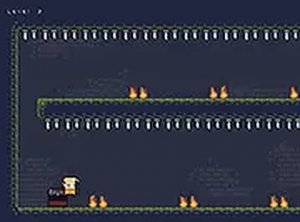
Every stage in Puzzle Rescue Adventure sets the same clear objective: move the shaman to a treasure box and release the friend trapped inside. Reaching the box is rarely a straight line. Walls and unstable ground block the direct route, so the challenge comes from reading the layout before you commit to a move. The rescue itself is the reward, and each new level rearranges the obstacles to force a fresh approach.
Route Planning and Obstacle Reading
Movement is deliberate rather than reactive. You guide the shaman with keyboard or mouse input, and a single careless step can leave a path blocked or a route unreachable. Tricky ground punishes hasty decisions, while walls narrow the options available. The most effective habit is to trace a full route in your head, check which tiles are safe, and only then start moving. Because the puzzles are turn-based in feel, there is no time pressure — only the cost of a poorly planned sequence.
Progressive Difficulty and Desktop Play
The difficulty curve rises gradually. Early levels introduce one obstacle type at a time, then later layouts combine walls and hazardous ground so you must manage both at once. The game is built for desktop computers, and full-screen mode keeps the board readable during longer sessions. Controls stay simple throughout, which keeps attention on the puzzle rather than the input method.
Who This Suits
Puzzle Rescue Adventure targets casual players who prefer logic problems over reflex tests. The family-friendly presentation and gentle adventure framing make it approachable for younger players, while the later levels give adults something to think about. Anyone who enjoys grid-based route puzzles will find the structure familiar, and the free-to-play model means there is no cost to try the opening stages.





Comments
0 comments