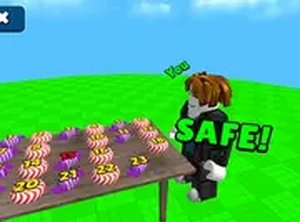
What Makes the Candy World Risky
The setting looks cheerful, but the candy itself is the main threat. Touching certain sweets costs progress, so the bright visuals double as a warning system. You learn to read the environment rather than react blindly. Moving platforms, disappearing blocks, and shifting paths appear across stages, and each new level introduces a different environmental hazard. The challenge comes from recognizing which elements are safe and which are not.
Jumping, Timing, and Route Planning
You control a character with keyboard keys or on-screen controls, moving left and right and using a jump button to cross gaps. Some platforms move on a fixed cycle, while others vanish after a few seconds. That turns every jump into a small timing decision: wait, commit, or find another route. Later stages combine hazards, so planning a path ahead matters as much as quick reflexes. The game mixes platforming action with light puzzle thinking, and the difficulty rises gradually.
Playing Solo or with a Friend
Two-player mode gives each player their own character. Coordination becomes part of the challenge, because both players need to handle the same obstacles together. Clear communication about when to jump and which platform to take helps more than rushing. Solo play emphasizes personal timing and pattern memorization; co-op adds a teamwork layer without changing the core rules.
Built for Quick Browser Sessions
The game runs in a browser with no download required. Simple controls keep it accessible to younger players, and the family-friendly presentation avoids graphic content. Because stages are short and repeatable, practicing a level to learn its layout is a natural way to improve. The gradual difficulty curve means early stages teach the basics before later ones demand precision and patience.



Comments
0 comments