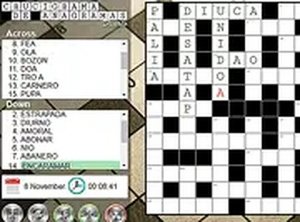
Daily Anagram Meets Crossword Grid
Spanish Word Puzzle Daily takes the familiar crossword layout and replaces standard clues with scrambled letter sets. Each clue is an anagram: the letters are present but out of order, and the player must rearrange them into a valid Spanish word that fits the grid. The puzzle updates every day, so the challenge stays fresh without requiring a download or account. The combination of anagram solving and grid placement means players work with two constraints at once—word length and crossing letters—which adds a layer of deduction beyond typical word scrambles.
How a Round Plays Out
A round begins with a crossword grid and a set of scrambled letter clues. Players select a grid tile and type the letter they believe belongs there, using the anagram as a guide. The game checks each answer automatically, giving immediate feedback on whether a letter or word is correct. Navigation works with both mouse and keyboard, so players can move between tiles without switching input methods. The objective is straightforward: complete all horizontal and vertical rows to finish the puzzle. Because the grid is interconnected, a single wrong letter can block several crossing words, encouraging careful checking rather than fast guessing.
Designed for Quick, Repeatable Sessions
The interface is intentionally simple, with no registration barrier and a clean layout that keeps attention on the grid. Full screen mode is available for players who prefer a larger view. The daily update structure means there is one puzzle per day, which naturally limits session length and supports a consistent habit. The game runs in a desktop browser and relies on keyboard and mouse input, so it is best suited to a computer rather than a phone or tablet.
Who Gets the Most From It
Spanish learners at various levels can use the puzzle to practice vocabulary in context, since each answer must be a real Spanish word. Native speakers may find it a light mental warm-up. The anagram format rewards familiarity with common Spanish letter combinations and word endings. Starting with shorter words and working toward longer ones is a practical approach, and regular daily play builds both vocabulary and pattern recognition over time.


Comments
0 comments