Exploring Pam's House
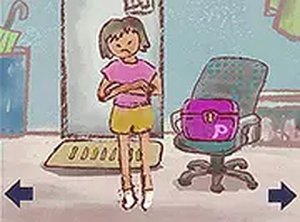
Players navigate a friend's home room by room using a mouse. Each space contains objects to examine, items to collect, and visual details that hint at solutions. Progress depends on noticing what is present rather than rushing. The hand-drawn art style gives every room a distinct, warm character, and the absence of a timer means players can study each scene for as long as they need.
Inventory and Item Logic
Collected items sit in an inventory and can be combined with one another or used on specific objects in the environment. A puzzle might require placing an item in the correct spot, entering a sequence, or matching a pattern seen elsewhere in the house. Because the game does not spell out these connections, players rely on observation and trial to determine what goes where.
Clues in the Environment
Solutions are embedded in the rooms themselves. Patterns, colors, and numbers appear on walls, furniture, and small objects, and they often correspond to locks, codes, or mechanisms elsewhere. The challenge is remembering what you have seen and connecting it to the right puzzle. This design rewards careful looking over fast clicking.
Pace and Accessibility
Pam's House Puzzle Escape runs directly in a web browser with no download required. It supports full-screen play and is built for desktop use with a keyboard and mouse. The relaxed structure makes it suitable for a short mental break or a longer session, and the difficulty comes from logical reasoning rather than reflexes.





Comments
0 comments