The Putt as a Puzzle
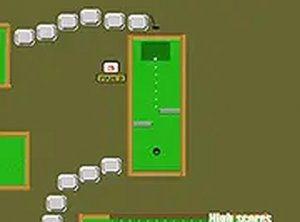
Precision Putting Puzzle reduces golf to a single repeated decision: how hard to hit the ball and at what angle. Mouse or touch input controls both direction and force, and the interface responds cleanly enough for small corrections before release. Every hole is a spatial problem, not a test of reflexes. Overshooting and undershooting are the two failure states, so reading the layout before committing matters more than swinging quickly.
Obstacles That Change the Math
Ramps, curved walls, and uneven terrain sit between the ball and the target. Some surfaces redirect the ball, while others slow it down or speed it up. That means a straight line is rarely the correct line. Players have to anticipate how each element will affect the ball's path and choose power accordingly. Learning the behavior of each obstacle type is the main skill the course teaches.
Calm Presentation, Clear Information
The visual style stays bright and uncluttered so the putting surface remains the focus. Colorful greens and clear markings help with judging distance and angle. Ambient background sound is gentle and does not compete for attention. The overall tone is calm, which suits a game built around concentration rather than speed.
Progression and Replay
Completing holes unlocks new layouts, each with a fresh set of spatial puzzles. Difficulty rises gradually, pushing players to refine their technique. Because each hole can be replayed, there is a reason to return and try for a lower stroke count. That structure gives steady feedback without requiring a large time commitment.
Accessibility and Performance
Controls are simple enough for newcomers, yet the puzzles offer enough depth for experienced players. No installation is required, and full-screen mode helps create an uninterrupted session. The game loads quickly and responds smoothly to input, which matters when fine adjustments decide a shot.



Comments
0 comments